Downtown Revitalization in Youngstown, Ohio
How redevelopment, infrastructure investment, and adaptive reuse are reshaping downtown into an investment-ready district.
Downtown Youngstown is undergoing a quiet but meaningful transformation. Once defined largely by vacancy and legacy industrial decline, the urban core is seeing targeted redevelopment, infrastructure upgrades, and adaptive reuse projects aimed at creating a more vibrant, walkable, and economically resilient downtown. This article examines the forces behind that change and what they mean for long-term real estate investment.
This analysis focuses on observable development patterns, public investment strategies, and urban revitalization principles commonly used to evaluate secondary-market downtowns.
Table of Contents
- Why downtown revitalization matters
- The shift from industrial core to mixed-use district
- Key redevelopment themes shaping downtown Youngstown
- Infrastructure and public investment
- Housing, office, and mixed-use momentum
- Retail, hospitality, and placemaking efforts
- Investment implications and risk considerations
- Long-term outlook for downtown Youngstown
- Sources and disclosures
Why Downtown Revitalization Is a Critical Signal
In many U.S. cities, downtown revitalization acts as a leading indicator for broader neighborhood recovery. When capital begins flowing into a city’s core—through infrastructure, housing, and placemaking—it often signals increased confidence in long-term economic stability.
- It anchors employment, education, and cultural institutions
- It supports higher-density housing demand
- It helps reframe the city’s identity for residents, employers, and investors
Downtown Youngstown’s Structural Shift
Historically, downtown Youngstown was built around heavy industry and supporting commercial uses. As that economic model faded, large portions of the core experienced vacancy and underutilization. Today, revitalization efforts reflect a different urban model focused on mixed-use density, adaptive reuse, and pedestrian-oriented streetscapes.
The modern downtown thesis
- Mixed-use buildings instead of single-purpose structures
- Residential density to support retail and services
- Adaptive reuse rather than large-scale demolition
- Walkability and streetscape improvements
Why adaptive reuse matters
- Lower basis for redevelopment
- Architectural character difficult to replicate
- Flexibility for residential, office, or creative conversions
Historic Context
Large former industrial and commercial buildings present both a challenge and an opportunity: they can be economical conversion candidates and preserve historic character that supports placemaking.
Development Patterns Emerging in Downtown Youngstown
Rather than one massive redevelopment project, downtown Youngstown’s progress is shaped by incremental, layered investment across residential, commercial, and institutional projects.
Theme 1 — Residential infill and conversions
- Lofts and apartments created from former office or industrial space
- Increased emphasis on downtown living for professionals and students
- Demand for proximity to education, healthcare, and cultural venues
Theme 2 — Mixed-use corridors
- Ground-floor commercial with residential above
- Buildings designed to activate the street rather than isolate uses
Theme 3 — Institutional anchors
- Universities, healthcare systems, and civic institutions provide stability
- Anchors reduce volatility and support consistent foot traffic
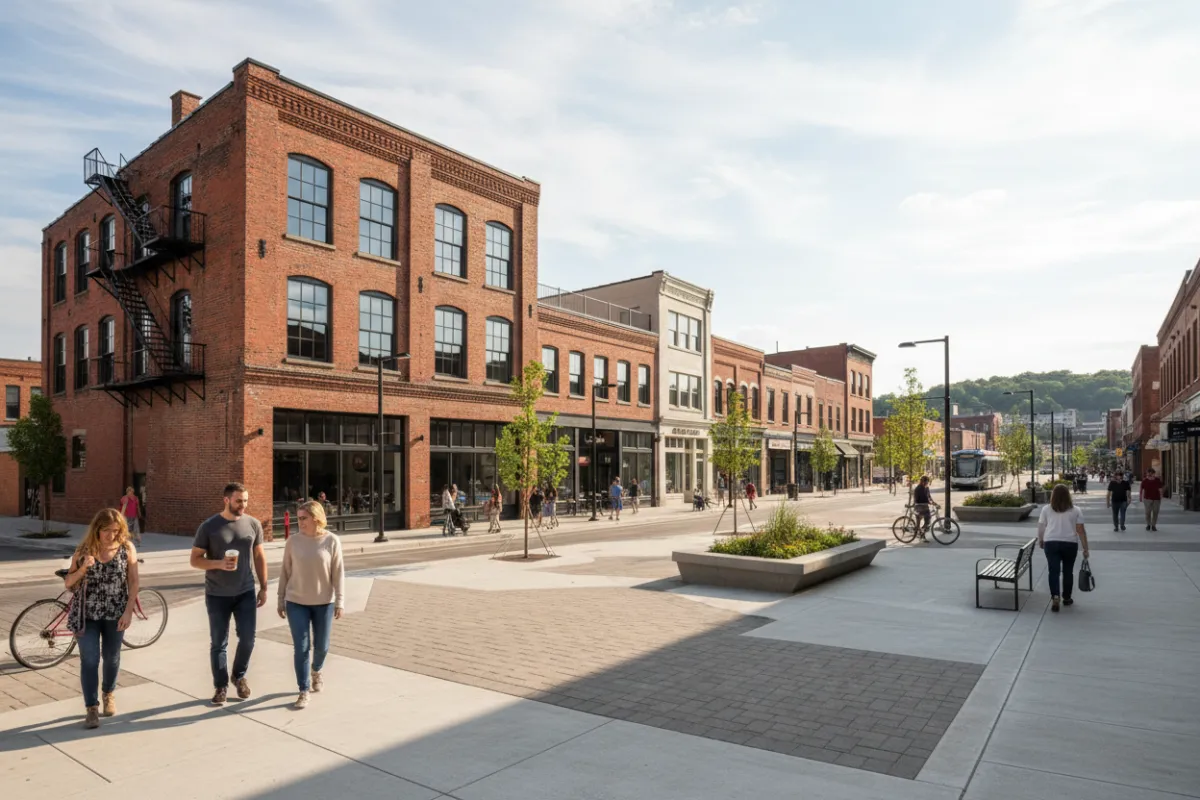
Adaptive reuse allows downtowns to grow without erasing their architectural identity.
Infrastructure as the Foundation of Revitalization
Successful downtown redevelopment typically begins with public-sector investment that reduces risk for private capital. In Youngstown, infrastructure improvements help set the stage for private development.
Common infrastructure priorities
- Street and sidewalk reconstruction
- Lighting and pedestrian safety upgrades
- Utility modernization
- Public space enhancements
Why infrastructure investment matters to investors
- Improves tenant and resident experience
- Signals long-term municipal commitment
- Helps stabilize property values over time
Real Estate Momentum in the Downtown Core
Downtown Youngstown’s revitalization is not uniform across property types, but several trends stand out across residential, office, and mixed-use sectors.
Residential
- Growing interest in downtown apartments and lofts
- Demand driven by lifestyle preference and affordability relative to larger cities
Office
- Shift away from large traditional office footprints
- Increased interest in flexible, smaller-scale office and creative space
Mixed-use
- Often the most resilient downtown asset class
- Diversified income streams reduce single-use risk
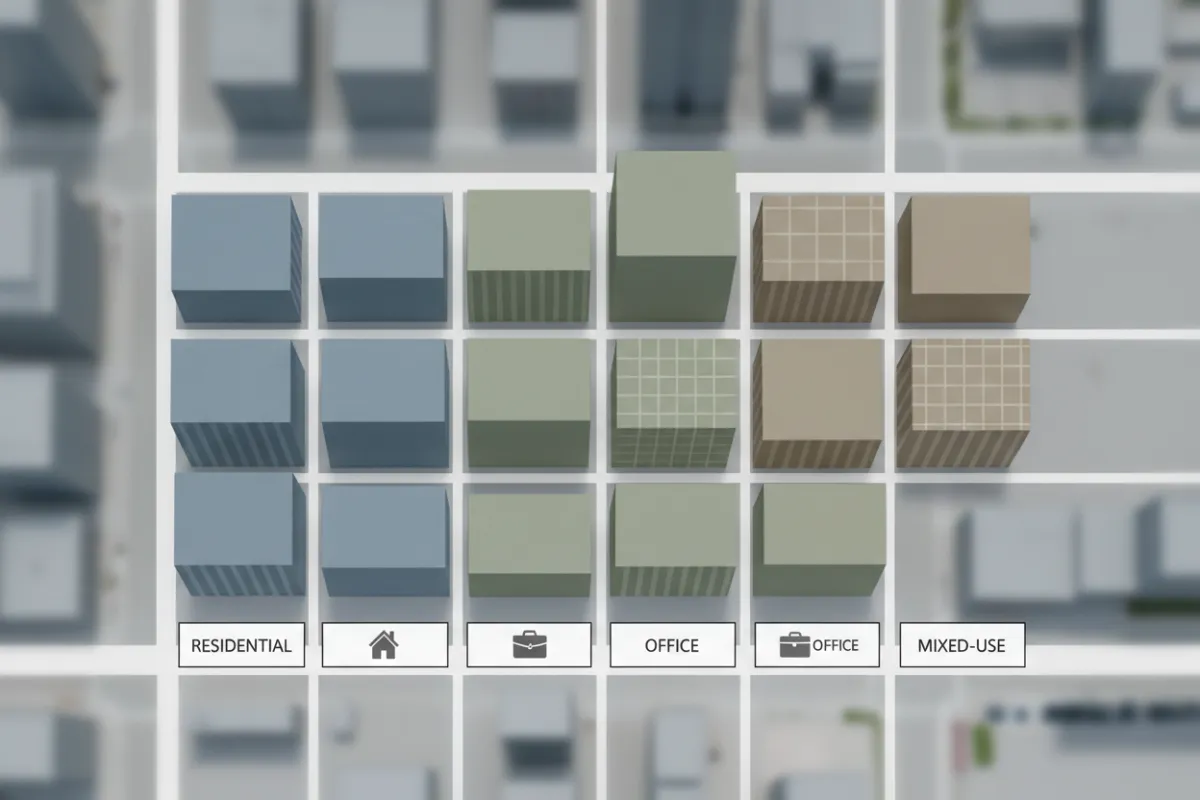
Mixed-use development helps balance risk and stabilize downtown occupancy.
Placemaking: Creating Reasons to Be Downtown
Revitalization is not just about buildings—it’s about activity. Retail, food, entertainment, and cultural programming help convert downtown from a place people pass through into a place they choose to spend time.
What placemaking looks like in practice
- Restaurants, cafes, and breweries
- Event programming and public art
- Improved streetscapes and gathering spaces
Why this matters for real estate
- Activity supports rent premiums and tenant retention
- Strong placemaking reduces volatility in economic downturns
What Downtown Revitalization Means for Investors
Downtown Youngstown’s revitalization creates opportunity—but not without risk. Investors should evaluate both the upside from early-cycle redevelopment and the execution and public-support risks that accompany these projects.
Potential advantages
- Lower entry pricing than larger metros
- Upside from early-cycle redevelopment
- Ability to reposition underutilized assets
Key risks
- Project-by-project execution risk
- Slower absorption compared to major cities
- Dependence on continued public investment
Investor note: Downtown investment typically rewards patience and long-term strategy more than short-term speculation.
The Long-Term Outlook for Downtown Youngstown
Downtown Youngstown’s trajectory reflects a broader trend seen in many mid-sized U.S. cities: measured revitalization rather than explosive growth. While the pace may be slower than in major metros, that same pace can reduce volatility and allow disciplined investors to enter at sustainable price points.
- Continued institutional presence
- Ongoing infrastructure commitment
- Residential demand tied to affordability and lifestyle
- Incremental, adaptive redevelopment rather than overbuilding
Stay Updated on Downtown Development
Sign up for periodic updates on downtown redevelopment trends, new projects, and market analysis.
Research updates only. No sales. Unsubscribe anytime.
FAQ: Downtown Youngstown Revitalization
Is downtown Youngstown fully revitalized?
No. Revitalization is ongoing and uneven, which is typical for secondary-market downtowns.
Does downtown investment carry more risk than residential neighborhoods?
Often yes, but it can also offer higher upside for long-term, well-located projects.
What types of properties benefit most from revitalization?
Mixed-use and adaptive reuse projects tend to benefit as activity and density increase.
Sources and Disclosures
This article draws on urban redevelopment frameworks, public investment patterns, and observable development trends common to downtown revitalization efforts in mid-sized U.S. cities.
Disclosure: This content is informational only and does not constitute investment, legal, or financial advice. Market conditions and redevelopment outcomes can change over time.