Rental Market Deep Dive: Youngstown, Ohio
Vacancy rates, rental yields, tenant demand, and strategies for maximizing returns in a shifting rental landscape.
Youngstown’s rental market is a central pillar of the city’s real estate story. Low acquisition prices, stable renter demand, and a wide range of housing stock make the area attractive to investors—but outcomes vary dramatically depending on location, property condition, and management quality. This deep dive examines vacancy, rent performance, and tenant dynamics across Youngstown to help readers understand where rental strategies tend to succeed—and where caution is warranted.
This analysis uses commonly referenced rental-market indicators and investor underwriting logic rather than promotional assumptions.
Table of Contents
- Overview of Youngstown’s rental landscape
- Vacancy trends and what they signal
- Rental yields and affordability dynamics
- Tenant demand: who rents in Youngstown and why
- Neighborhood and property-type variation
- Strategies for maximizing rental returns
- Risks unique to the local rental market
- Outlook for rents and occupancy
- Sources and disclosures
Overview of the Youngstown Rental Market
Youngstown is primarily a workforce rental market. Unlike high-growth metros driven by luxury apartments or rapid population inflows, rental demand here is anchored by affordability, employment stability, and long-term residency patterns.
- A high proportion of renter households
- Modest rent levels compared to Ohio and the U.S.
- Strong sensitivity to property condition and management
- Meaningful differences between neighborhoods and submarkets
Rental Yields in Youngstown
Youngstown frequently attracts attention for its rent-to-price relationship. Lower acquisition costs mean that even moderate rents can translate into higher gross yields than many U.S. markets.
Understanding yield in context
- Gross yield alone is not profitability
- Expenses matter more in older housing stock
- Net operating income (NOI) determines sustainability
Expense categories that impact yield
- Maintenance and capital expenditures
- Property taxes and insurance
- Vacancy loss
- Management costs (even for self-managed properties)
Higher yields are often available—but they come with higher responsibility for maintenance, tenant screening, and reserve planning.
Tenant Demand Drivers
Understanding tenant demand is critical to stabilizing cash flow. Youngstown’s renter base reflects a mix of demographics and economic drivers.
Common tenant profiles
- Workforce renters seeking affordability
- Long-term tenants with local employment ties
- Students and staff connected to nearby institutions
- Renters priced out of homeownership due to credit or savings constraints
What tenants value most
- Clean, safe, functional housing
- Predictable rent and utilities
- Responsive maintenance
- Proximity to employment and services
Investor Insight
Tenants in affordability-driven markets often prioritize reliability and condition over luxury finishes.
Why Location Matters More Than Citywide Averages
Rental performance in Youngstown varies dramatically by neighborhood and asset type. Two properties with similar rents can produce very different outcomes.
Single-family rentals
- Often attract longer-term tenants
- Lower turnover but higher capex risk
Small multifamily (2–4 units)
- Can balance cash flow and diversification
- Require stronger management discipline
Older multifamily buildings
- Potentially higher yields
- Greater operational complexity and maintenance exposure
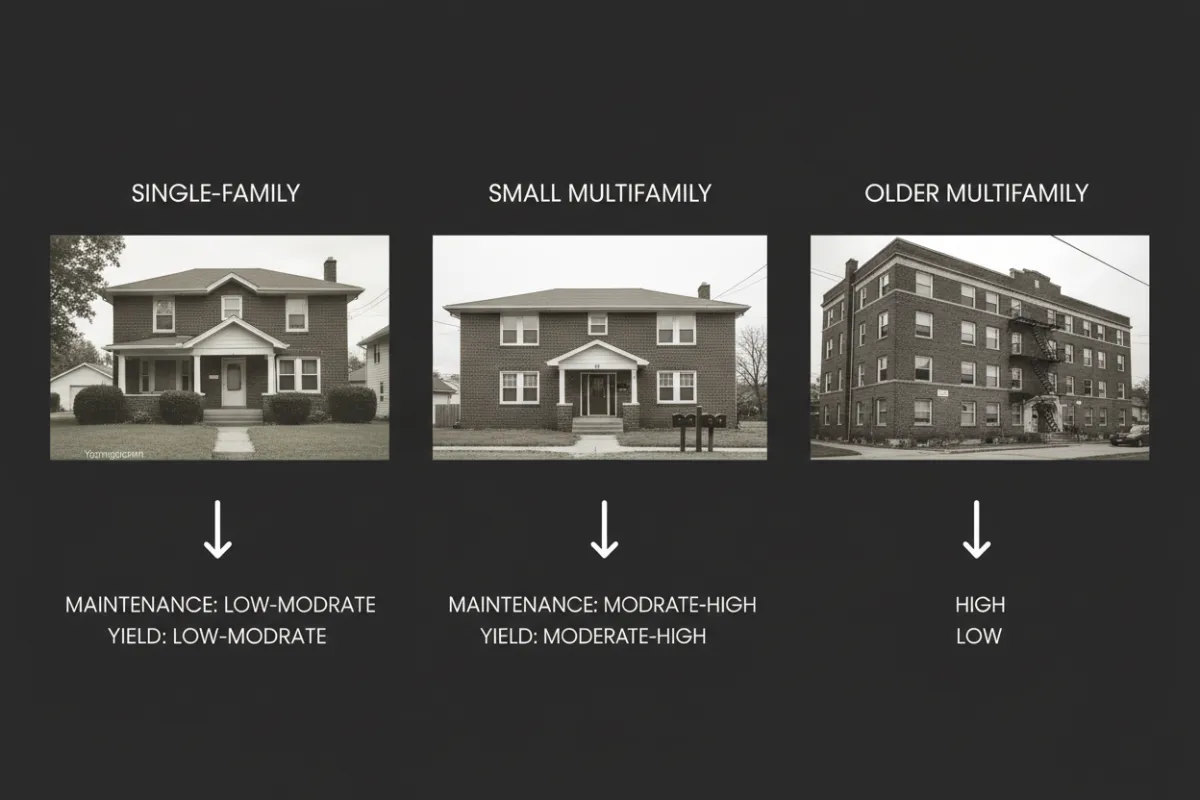
Rental Performance Varies by Asset Type — matching property type to management capacity is essential.
Strategy 1 — Buy for condition, not just price
A slightly higher purchase price for a stabilized property can outperform a distressed “cheap” deal over time.
Strategy 2 — Renovate for durability, not flash
Focus on mechanical systems, flooring, and fixtures that reduce long-term maintenance and turnover.
Strategy 3 — Screen tenants thoroughly
Strong screening reduces vacancy, turnover, and maintenance costs; it’s a primary defense in affordability-driven markets.
Strategy 4 — Price rents realistically
Slightly under market pricing often reduces vacancy and improves annual cash flow, especially where tenant reliability and condition matter most.
Risks Investors Should Not Ignore
- Deferred maintenance in older housing stock
- Block-by-block neighborhood variability
- Insurance cost volatility
- Tenant concentration risk
- Underestimating long-term capital expenditures
Rental Market Outlook for Youngstown
The rental market outlook in Youngstown is shaped less by rapid growth and more by stability and affordability. As homeownership costs remain elevated nationally, rental demand for affordable, well-maintained units is likely to persist.
- Continued affordability advantage versus Ohio and U.S. averages
- Steady demand for workforce housing
- Rent growth tied more to property quality than market-wide surges
Download the Youngstown Rental Analysis Toolkit
Access a free toolkit including a vacancy planning checklist, rental expense worksheet, and tenant screening framework.
Educational content only. No sales. Unsubscribe anytime.
FAQ: Youngstown Rental Market
Are vacancy rates high in Youngstown?
Vacancy varies widely. Well-maintained units in stable neighborhoods often perform far better than citywide averages suggest.
Are higher yields risk-free?
No. Higher yields usually reflect higher operational responsibility and maintenance requirements.
Is professional property management necessary?
Not always, but investors should price management costs into their analysis even if self-managing.
Sources and Disclosures
This article reflects commonly referenced rental-market indicators, public housing data, and standard investor underwriting practices.
Disclosure: This content is for informational purposes only and does not constitute investment, legal, or financial advice. Rental performance varies by property, location, and management execution.
References
- Public housing datasets, municipal records, and commonly used rental-market indicators
- Investor underwriting templates and regional property-tax data